Uncategorized
TuLi Results Timeline: When Fat Leaves
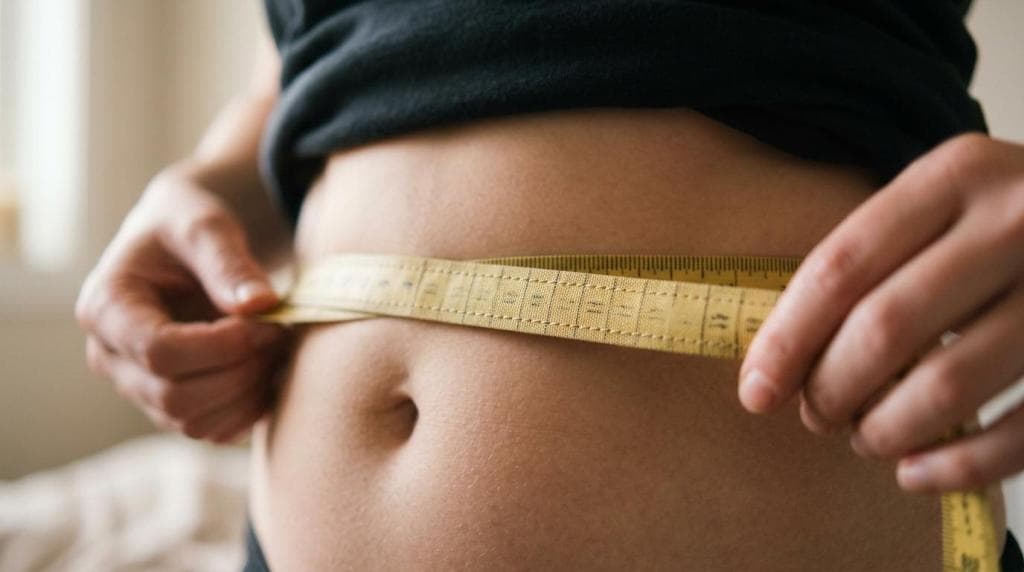
Body contouring results are usually gradual, not instant. If you are asking when fat “leaves,” the answer depends on the treatment method, the area treated, and whether the treatment relies on your body clearing injured fat cells over time or removes fat more directly.
TL;DR: Summary
- Body contouring results from cryolipolysis, or fat freezing, usually build over 8 to 16 weeks, with stronger visible change often reported around 12 to 16 weeks.
- FDA guidance describes cryolipolysis as a noninvasive body contouring method that uses cold temperatures to kill fat cells and reduce visible fat bulges without surgery.
- Published studies report measurable abdominal fat reduction of 28.45% at 12 weeks and 31.13% at 16 weeks after cryolipolysis, while some studies show earlier changes by 8 weeks or within 1 month.
- The biggest mistake is expecting the scale to reflect contour change right away; local fat reduction, skinfold thickness, and photos often show change before body weight does.
- If your priority is a faster appointment, no general anesthesia, and immediate return to normal activity, a minimally invasive option like TuLi deserves a separate discussion because its treatment experience differs from surface-based fat freezing.
- The best way to judge body contouring results is by standardized photos, tape measurements, and a 12- to 16-week follow-up window, not day-by-day mirror checks.
That timing matters because people often compare very different categories under the single label of “body contouring.” Noninvasive cryolipolysis, minimally invasive contouring, and liposuction can all reduce fat, but they do it in different ways, so the result timeline is not the same.
When do body contouring results usually start to show?
Most body contouring results appear gradually, and cryolipolysis studies often show clearer change at 8 to 16 weeks. That is the normal pattern for surface-based fat freezing rather than a sign that nothing is happening.
The FDA describes cryolipolysis as a noninvasive method performed on the skin surface. Its goal is to kill fat cells with cold temperatures and reduce visible fat bulges without surgery. Because the treated adipocytes are not suctioned out during the visit, the visible change depends on your body processing and clearing the injured fat cells over time.
A common misconception is that results should appear immediately after treatment. In published studies, measurable changes are more often reported at follow-up visits. One prospective multicenter study found abdominal subcutaneous fat reduction of 28.45% at 12 weeks and 31.13% at 16 weeks versus baseline.
“TuLi is designed as a 15-minute full-body treatment, with no general anesthesia and immediate return to normal activity.”
That does not mean every patient must wait 16 weeks to notice anything. A 2021 cryolipolysis study reported that results can be observable within about a month, while complete lipid metabolization and elimination may take several months. If you are checking too early, then you may miss the trend that becomes clearer later.
Why does fat leave slowly after cryolipolysis or fat freezing?
Cryolipolysis works slowly because the body has to clear injured fat cells after treatment. The key entities are adipocytes and lipid metabolization, not instant fat removal.
With fat freezing, the treatment creates a biologic response in subcutaneous fat. After adipocytes are damaged by cold exposure, the body gradually breaks down and clears their contents. That is why studies talk about skinfold thickness and fat-thickness reductions over weeks and months rather than overnight change.
This also explains why local contour can improve even when weight barely moves. The treated area may shrink while total body weight stays stable because the amount of fat in one zone is small compared with your whole-body mass. If your goal is a flatter lower abdomen or smaller flank bulge, then photos and measurements are usually more useful than the scale.
A 2014 volumetric study reported average fat loss of 39.6 cc at 2 months after a single cryolipolysis cycle, with treated flank thickness decreasing from 45.6 ± 5.8 mm at baseline to 38.6 ± 4.6 mm at 2 months. Those numbers fit the broader pattern: change happens, but it usually unfolds over follow-up visits.
What are the body contouring result timelines by treatment type?
The timeline depends on the treatment category, and cryolipolysis, TuLi, and liposuction should not be treated as interchangeable. If you compare them fairly, look at both fat-reduction mechanism and recovery profile.
- TuLi minimally invasive body contouring: TuLi is positioned around a fast in-office experience, with a 15-minute full-body treatment, no general anesthesia, no downtime, and the ability to treat multiple areas in one visit. Because it is minimally invasive rather than surface-based cryolipolysis, ask specifically about swelling, early contour checks, and the expected photo timeline for your area.
- Cryolipolysis or fat freezing: Visible change often builds over 8 to 16 weeks. Published data include 28.45% abdominal fat reduction at 12 weeks and 31.13% at 16 weeks, with some reports of earlier visible change within about 1 month.
- Other noninvasive surface treatments: Follow-up windows in published literature often run from 8 weeks to 3 to 6 months. If the treatment depends on tissue response rather than direct removal, patience is part of the process.
- Liposuction: Liposuction removes fat from selected body areas, and Mayo Clinic notes that results usually last a long time if weight is maintained. Since fat is removed directly, the “when does fat leave” question is different from cryolipolysis, though final contour still depends on healing.
The practical takeaway is simple. If you want a published, evidence-based expectation for noninvasive fat freezing, use a 12- to 16-week checkpoint. If you are comparing that with a minimally invasive option, ask for the timeline that matches that method instead of assuming the same clock applies.
How can you track body contouring results week by week?
You should track body contouring results with repeatable measurements, not memory. Photos, tape measurements, and milestone dates are the most useful tools.
Step 1 is to capture a true baseline before treatment. Step 2 is to repeat measurements at fixed intervals, usually week 4, week 8, week 12, and week 16. Step 3 is to compare images taken under the same conditions, because posture, lighting, sodium intake, and menstrual-cycle changes can make a normal abdomen look very different from one day to the next.
A simple tracking routine works well for most patients:
- Baseline photos: same lighting, stance, clothing, and camera distance
- Tape measurements: waist, lower abdomen, flanks, thigh, or arm
- Milestone checks: week 4, week 8, week 12, and week 16
- Context notes: weight, hydration, workouts, and cycle timing
Pro tip: do not take daily progress photos. Daily checks create noise, not clarity. Weekly or biweekly comparisons are more honest and far easier to interpret.
“TuLi can treat multiple areas in one visit and target up to 3–4x more tissue per session.”
How do TuLi and cryolipolysis compare for speed and downtime?
TuLi and cryolipolysis differ most in treatment experience, not just in branding. TuLi is minimally invasive, while cryolipolysis is a noninvasive surface treatment recognized by the FDA category.
Cryolipolysis has a well-known delayed timeline because the body clears cold-injured fat cells over weeks. TuLi is presented around a different value set: a 15-minute full-body treatment, no general anesthesia, immediate return to normal activity, and no special post-op care. If schedule disruption is your main concern, then that difference matters as much as the contour result itself.
The trade-off is that these are not apples-to-apples categories. Cryolipolysis has published follow-up data showing change at 8, 12, and 16 weeks. With TuLi, the better question is not “Does fat leave on the same schedule as fat freezing?” but “What contour milestones should I expect from this minimally invasive method in my treatment area?” That is the right way to compare real options instead of marketing labels.
“TuLi is a minimally invasive body contouring option developed by Dr. Martin Moskovitz, a double board-certified surgeon with 35+ years of experience.”
How do minimally invasive body contouring and liposuction compare for fat removal and recovery?
Minimally invasive body contouring and liposuction differ in how directly they remove fat. Mayo Clinic describes liposuction as a method that removes fat from areas like the stomach, hips, thighs, buttocks, arms, or neck.
If your main question is when fat physically leaves, liposuction is the clearest answer because fat is removed during the procedure. If your question is how to avoid general anesthesia or major schedule disruption, then minimally invasive contouring enters the conversation. TuLi is positioned specifically around no general anesthesia and immediate return to normal activity, which is a different patient priority than maximum surgical removal.
The trade-off is straightforward. Surgery can be more direct, while minimally invasive options may fit patients who want less interruption. A common mistake is assuming “less invasive” means “weaker” or “instant.” What matters is matching the method to the amount of fat, the number of areas, your recovery preferences, and how quickly you need to resume normal life.
What factors make body contouring results faster or slower?
Results are shaped by treatment type, body area, and follow-up timing. Cryolipolysis studies and clinical practice both show that not every area responds at the same speed.
Small, soft fat pockets may look different sooner than larger or denser areas. The abdomen and flanks often need patience because they are large visual zones. Weight fluctuation can also hide local contour change. If you gain weight during the follow-up window, then your treated area may still improve while the overall silhouette changes less than expected.
The biggest variables are usually:
- Area size
- Weight stability
- Baseline skinfold thickness
- Number of treatment areas
- Follow-up timing
- Photo quality
Another misconception is that one study equals one guaranteed timeline. In a 2020 split-body cryolipolysis trial, there was no statistically significant difference in percentage body fat or waist circumference between baseline and 12-week visits, even though the paper also cited prior studies showing reductions after 8 weeks and at 3 to 6 months. That range is exactly why individualized follow-up matters.
How should you prepare for a body contouring consultation if timeline matters most?
You should go into the consultation with a timeline question, a measurement goal, and a treatment comparison. FDA categories and provider-specific protocols both matter here.
Step 1 is to define the area and the outcome in objective terms. “I want my lower abdomen to measure 1 inch less” is more useful than “I want to be slimmer.” Step 2 is to ask what result window is typical for that method in that area. Step 3 is to ask what counts as an early check, a midpoint review, and a final assessment.
Bring three things to the visit: baseline photos, a list of target areas, and your schedule constraints. If you need immediate return to work or parenting duties, say that early. That is where a minimally invasive option like TuLi may stand out, since the stated protocol includes no general anesthesia, no downtime, and no special post-op care.
“TuLi is performed in an accredited Quad A surgical facility and includes both virtual and in-office consultations.”
What should you do between treatment and your final result window?
You should protect the result window instead of chasing it. Stable habits matter more than constant checking.
Step 1 is to keep your weight reasonably stable. Body contouring can reduce local fat, but it does not cancel out broader weight gain. Step 2 is to follow the provider’s aftercare instructions exactly, even if the treatment is marketed as low-disruption. Step 3 is to use your preset checkpoints rather than reacting to daily mirror changes.
This is where if-then logic helps. If your photos improve but the scale does not, then the treatment may still be working locally. If you see no visible change by the expected follow-up window, then it may be time to review whether the area, treatment type, or number of sessions was the limiting factor. If swelling or temporary tissue changes are part of the method, then early appearance may not predict the final contour.
When should you expect another session or a different treatment?
Another session or a treatment change is usually considered after the expected result window has passed. For cryolipolysis, that often means reviewing progress around 12 to 16 weeks.
If there is measurable improvement but not enough for your goal, then another session may make sense. If there is little change and the fat pocket is large, fibrous, or spread across multiple zones, then a different category may be a better fit. This is where comparing noninvasive, minimally invasive, and surgical options becomes useful rather than theoretical.
The smart question is not “Did this fail?” but “Did this method match the problem?” A smaller discrete bulge may respond well to one approach, while broader circumferential fullness may call for a different plan. That is also why body contouring results should be judged against baseline anatomy, not social media timelines.
Ready to take the next step?
Request a consultation with Dr. Moskovitz to discuss whether the TuLi procedure is right for you.
Request a Consultation