Uncategorized
Mini Liposuction vs Awake Lipo: Changes for Patients
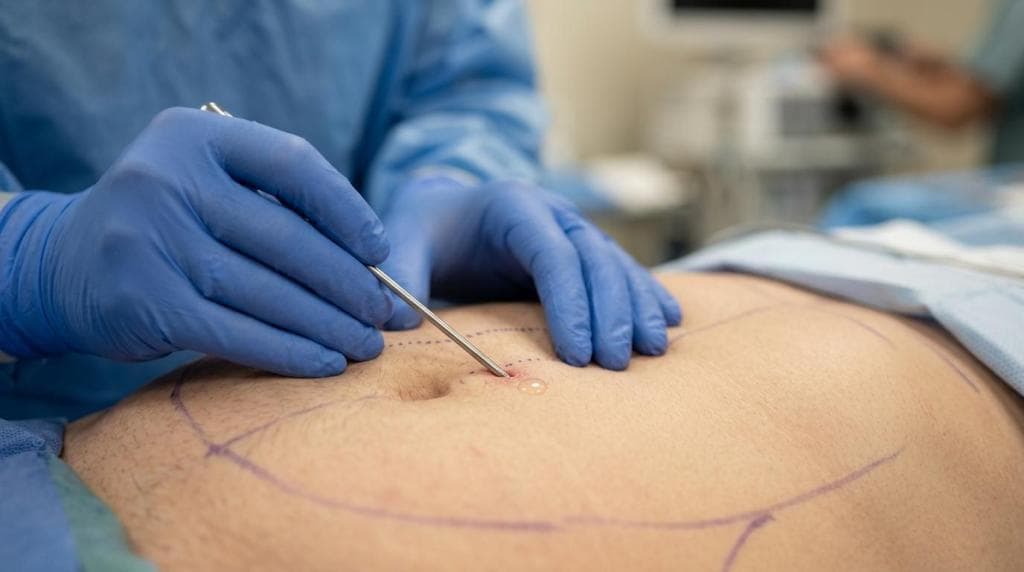
Many patients use mini liposuction and awake lipo as if they mean the same thing, but they describe different parts of treatment. That distinction matters if you are comparing local anesthesia, downtime, treatment size, and options like TuLi, a minimally invasive body contouring procedure designed around in-office treatment without general anesthesia.
TL;DR: Summary
- Mini liposuction vs awake lipo is not a true apples-to-apples comparison: mini liposuction usually describes a smaller treatment area or lower fat volume, while awake lipo describes liposuction done with local anesthesia, often with light oral or inhaled sedation instead of general anesthesia.
- Small-area fat removal often can be done awake: Cleveland Clinic and ASPS guidance both support local anesthetic approaches for smaller-volume liposuction, while larger or longer cases more often need deeper anesthesia and closer monitoring.
- Awake does not automatically mean minor, and mini does not automatically mean awake: the right setup depends on treatment area, expected volume, pain control needs, and patient health factors like obstructive sleep apnea, obesity, or cardiopulmonary risk.
- Tumescent technique is central to both discussions: diluted local anesthetic with epinephrine helps numb tissue and reduce bleeding; ASPS practice guidance generally accepts lidocaine up to 35 mg/kg in epinephrine-containing wetting solution injected into subcutaneous fat.
- For patients who want a less intensive body-sculpting option, TuLi is relevant because it is built around in-office treatment with no general anesthesia, immediate return to normal activity, and multiple areas treated in one visit.
If you remember one thing, make it this: mini liposuction answers how much is treated, while awake lipo answers how anesthesia is handled. Once you separate those two ideas, the decision gets much clearer.
What is the real difference between mini liposuction and awake lipo?
The main difference is category. Mini liposuction refers to a smaller-area or lower-volume fat removal procedure, while awake lipo refers to anesthesia using local numbing, often with light sedation, while the patient stays conscious.
That means one term describes scope, and the other describes anesthesia. A person can have mini liposuction while awake, but not every mini case is automatically awake, and not every awake lipo case is “mini.”
The confusion happens because smaller procedures often pair well with local anesthesia alone. Cleveland Clinic notes that liposuction for smaller areas may be performed under local anesthesia without going to sleep. ASPS guidance makes a similar point by separating smaller-volume cases from larger-volume cases that often require sedation or general anesthesia for comfort.
A common misconception is that awake lipo is a special liposuction technique. It is not. The fat is still removed with a cannula after the area is infiltrated with wetting solution. What changes is the anesthesia plan, patient experience, and monitoring requirements.
Is mini liposuction always performed while you are awake?
No. Mini liposuction is often compatible with local anesthesia, but surgeon judgment, body area, and comfort needs can still lead to sedation or another anesthesia plan. TuLi sits in this conversation because it is specifically structured around in-office treatment without general anesthesia.
If the treatment area is small and the expected fat volume is limited, local anesthesia alone may be enough. That is why mini liposuction is commonly discussed alongside awake approaches. ASPS practice guidance states that in smaller-volume liposuction cases, infiltrate solutions alone may provide adequate pain relief.
If the case expands from one small pocket to several zones, or if the patient is highly anxious, the anesthesia discussion changes. “Mini” does not guarantee a certain experience on the table. Some patients are calm and comfortable with local numbing only. Others do better with monitored anesthesia care or deeper sedation.
“TuLi is described as a 15-minute, in-office body contouring treatment with no general anesthesia and no downtime.”
A practical tip here is simple: ask whether your surgeon is calling it “mini” because of volume removed, number of areas, or shorter operating time. Those are related, but they are not identical.
What differences should patients compare before choosing mini liposuction vs awake lipo?
Patients should compare treatment size, anesthesia depth, recovery, comfort, and safety monitoring. Those factors decide whether a smaller procedure can stay local or whether a broader plan makes more sense.
Start with the goal, not the label. The following differences shape the decision most:
- Definition: Mini liposuction describes a smaller treatment area or lower-volume fat removal; awake lipo describes staying conscious under local anesthesia, often with light sedation.
- Treatment scope: Mini cases usually focus on localized fat pockets like the chin, bra roll, lower abdomen, or flanks; awake lipo can be used for some of those same areas if the case remains manageable.
- Anesthesia needs: Smaller cases may work with local anesthesia alone; larger, longer, or more uncomfortable cases often need more sedation or general anesthesia.
- Recovery profile: Awake local approaches may mean less grogginess and a simpler same-day recovery because there is no general anesthesia to recover from.
- Patient experience: Some patients like being conscious and avoiding a hospital-style anesthesia setup; others prefer being more deeply sedated if the treatment is extensive.
- Risk trade-offs: Awake surgery may reduce risks tied to general anesthesia, according to ASPS, but it is not ideal for procedures that last many hours or need broader pain control.
If you are comparing options, ask one clarifying question first: “Is my surgeon recommending this because the fat volume is small, because the anesthesia can stay local, or both?”
How does awake lipo anesthesia work step by step?
Awake lipo usually follows a local-first sequence: evaluation, marking, tumescent infiltration, light sedation if needed, and monitored fat removal while the patient remains responsive.
First, the surgeon confirms whether the planned area and expected volume fit a local-anesthesia approach. This is where health history matters. ASPS notes awake surgery may be attractive for some patients with obstructive sleep apnea, obesity, heart disease, or lung conditions because it can avoid the effects of general anesthesia.
Second, the treatment area is marked and prepared. A wetting solution is introduced into the tissue. Cleveland Clinic describes that solution as salt water plus local anesthetic and epinephrine, which helps reduce bleeding and bruising while numbing the area.
Third, the patient receives local anesthesia, sometimes paired with an oral or inhaled sedative. ASPS describes awake plastic surgery as keeping the patient conscious, able to respond, and generally relaxed.
A good question to ask is whether “awake” means local only or local plus sedation at that practice. Patients often assume those are the same. They are not.
How does mini liposuction remove fat step by step?
Mini liposuction removes localized fat through small incisions, tumescent infiltration, cannula-based suction, contour checks, and compression after treatment. The mechanical steps are similar to standard liposuction, but the scale is smaller.
The process usually begins with a focused contour plan. The surgeon identifies what should come out and what should stay. Good body contouring is not just fat removal. It is controlled shaping.
Next comes infiltration of tumescent or superwet solution. ASPS describes diluted local anesthesia being infused before the cannula is used, and that fluid helps reduce tissue trauma and bleeding. Once the area is numb and expanded, a small cannula is inserted through tiny incisions to suction fat from the targeted zone.
The surgeon then reassesses symmetry and contour in real time. This matters because mini liposuction often treats visible transition zones where over-removal can look just as unnatural as under-treatment.
“Developed by Dr. Martin Moskovitz, TuLi is intended to treat multiple areas in one visit and target up to 3 to 4 times more tissue per session.”
A frequent misunderstanding is that smaller liposuction is “easy” liposuction. In reality, small areas can demand more precision because minor contour irregularities show quickly.
How does recovery change step by step after each option?
Recovery differs most in the first 24 hours. Local-awake treatment often means less anesthesia-related fatigue, while larger or more sedated cases may need a slower return to normal activity.
Right after treatment, patients are usually monitored and then discharged the same day. If only local anesthesia was used, many people avoid the heavy grogginess tied to general anesthesia. That can make the first evening simpler.
Over the next few days, swelling, drainage, bruising, and soreness are expected variables. The tumescent fluid itself can influence early fullness and temporary leakage from incision sites. Mini cases usually involve smaller treated zones, so mobility often returns quickly, though “quickly” is not the same as “instantly normal.”
By the second week and beyond, the main difference becomes area treated, not just awake versus asleep. If more tissue was addressed, swelling can last longer even if the procedure was technically done awake. Pro tip: judge recovery by the extent of treatment, compression instructions, and activity limits, not by the marketing label alone.
Which patients are good candidates for mini liposuction?
Good candidates usually have localized fat deposits, stable weight, decent skin elasticity, and realistic shaping goals. Mini liposuction is best for contour refinement, not major weight reduction.
The best fit is someone with a defined concern that persists despite diet and exercise. Think of a stubborn pocket rather than generalized weight gain. If the skin can contract well, results tend to look smoother.
Patients often do well when these factors are present:
- Localized fullness: one or a few small areas rather than broad circumferential fat
- Weight stability: close to baseline weight for several months
- Skin quality: enough elasticity to retract after fat removal
- Clear expectations: contour change rather than scale change
Many patients assume mini liposuction can fix loose skin. It usually cannot. If laxity is the dominant issue, fat removal alone may expose it more clearly.
When is awake lipo not the best option?
Awake lipo is not ideal when the treatment is too extensive, the pain-control demands are too high, or the patient cannot comfortably tolerate being conscious during the procedure.
ASPS states that awake procedures are not suitable for every case, especially those that take many hours or require more comprehensive pain management. That matters because the awake-versus-asleep choice is partly about procedure logistics, not just preference.
If several large areas are being treated, if aspirate volume is expected to be high, or if positioning will be difficult, then deeper anesthesia may offer better control and comfort. The same may be true for patients with severe anxiety, movement issues, or low tolerance for procedural sensation even when the area is numb.
Another misconception is that awake always means safer in every setting. The more accurate view is narrower: avoiding general anesthesia may reduce certain anesthesia-related risks, but only when the case itself is well suited to an awake format.
How do safety standards, tumescent technique, and monitoring affect the choice?
Safety depends on case selection, lidocaine dosing, monitored vital signs, and a disciplined tumescent technique. ASPS guidance and clinical standards matter more than whether a procedure is labeled mini or awake.
Tumescent liposuction works by infiltrating tissue with a dilute solution that typically includes local anesthetic and epinephrine. The local anesthetic provides numbness, while epinephrine helps constrict blood vessels and reduce bleeding. PubMed reviews and ASPS practice guidance both describe the technique as a core reason smaller-volume liposuction can sometimes be done under local anesthesia or monitored anesthesia care.
ASPS practice guidance generally accepts lidocaine up to 35 mg/kg when injected into subcutaneous fat with epinephrine-containing solution. That does not mean every patient should approach that upper limit. It means dosing must be calculated deliberately, with attention to total area treated, patient size, timing, and monitoring.
That same logic is why procedures like TuLi are discussed in the same broader category as local, in-office body contouring rather than hospital-style general-anesthesia surgery. The important issue is not branding. It is whether the anesthesia plan, monitoring, and treatment extent match accepted standards.
You can learn a lot by asking these questions before treatment:
- Monitoring: Who tracks blood pressure, heart rate, oxygenation, and comfort during the procedure?
- Anesthesia plan: Is this local only, local plus oral sedation, or monitored anesthesia care?
- Dose planning: How is lidocaine dose calculated for my weight and treatment area?
- Escalation: If I am uncomfortable, what is the backup plan?
Does TuLi change the mini liposuction vs awake lipo decision?
Yes, in selected patients. TuLi changes the comparison because it is framed as a minimally invasive in-office body contouring procedure without general anesthesia, which places it closer to the awake, less intensive side of the spectrum than traditional operating-room liposuction.
That does not make it a synonym for mini liposuction, and it does not erase the usual questions about candidacy. Patients still need to ask what areas are being treated, how much tissue is expected to be addressed, and whether skin quality supports the plan.
Where it becomes relevant is practical decision-making. If a patient wants fat reduction and shape change but strongly prefers no general anesthesia, immediate return to normal activity, and treatment of multiple areas in one visit, this type of option belongs in the comparison. If the goal is classic liposuction with broader removal, or if the anatomy is more complex, a more traditional setup may still be the better fit.
The strongest patient position is not “I want mini liposuction” or “I want awake lipo.” It is: “I want the least intensive procedure that can safely achieve the contour change I actually want.”
Ready to take the next step?
Request a consultation with Dr. Moskovitz to discuss whether the TuLi procedure is right for you.
Request a Consultation