Uncategorized
7 Facts About Minimally Invasive Liposuction Options
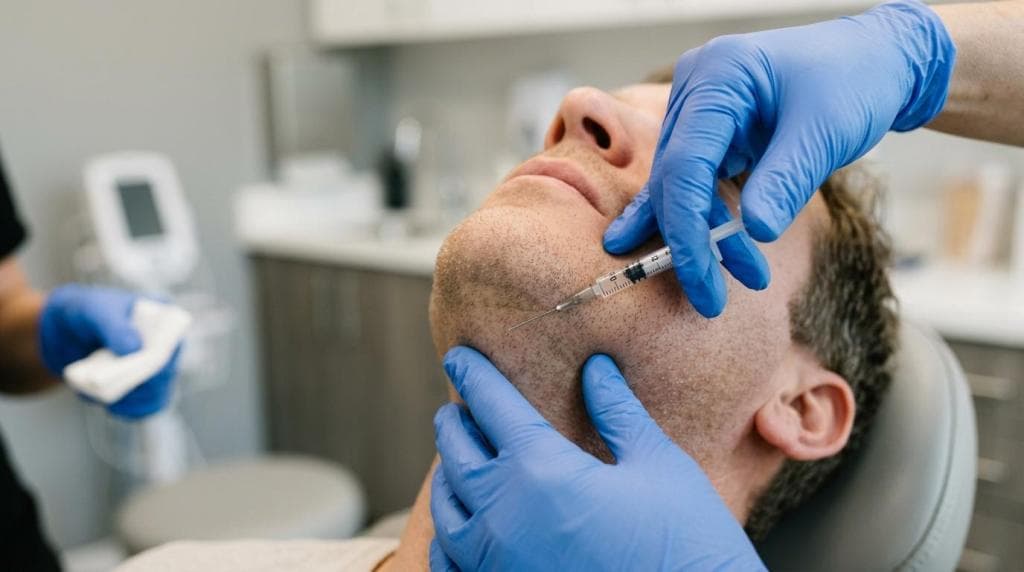
Adults looking into body contouring often use “minimally invasive liposuction” as a catch-all term, but the category is narrower and more technical than it sounds. TuLi is relevant here because it is an in-office minimally invasive body contouring procedure, which makes it a useful point of comparison when people ask how low-incision fat reduction differs from traditional liposuction.
TL;DR: Summary
- Minimally invasive liposuction options mainly include laser-assisted liposuction and ultrasound-assisted liposuction for suction-based fat removal, while deoxycholic acid injection is FDA-approved only for adult submental fat under the chin.
- These treatments contour localized fat, not overall body weight. The American Society of Plastic Surgeons and Mayo Clinic both describe liposuction as body shaping rather than weight-loss treatment.
- Safety depends on candidacy, treatment area, technique, and provider skill. A 2024 systematic review reported measurable complication rates after liposuction, including hyperpigmentation at 1.49% and seroma at 0.65%.
- If your goal is multi-area body contouring with less disruption, office-based options like TuLi may matter because treatment setting, anesthesia needs, downtime, and aftercare can differ sharply from traditional liposuction.
- The best decision usually comes from matching the method to the fat location: assisted liposuction for suction-based removal in body areas, deoxycholic acid only for the chin, and neither as a general obesity solution.
The useful question is not “What is the least invasive fat treatment?” It is “Which treatment matches the area, the amount of fat, the safety profile, and the recovery trade-off I can accept?” That shift helps separate marketing language from evidence-backed options.
What does minimally invasive liposuction actually mean?
Minimally invasive liposuction means localized fat removal through small incisions, usually with a cannula and often with energy-assisted methods such as laser-assisted liposuction or ultrasound-assisted liposuction. Mayo Clinic and ASPS both frame it as contouring, not broad medical weight reduction.
In practical terms, “minimally invasive” usually means the skin is not widely opened, treatment targets specific fat pockets, and the procedure may be possible in a clinic or medical office when only a small amount of fat is removed. That is a major distinction from major surgery, but it is still a medical procedure with real planning, consent, and risk management.
A common misconception is that minimally invasive means non-surgical or nearly risk-free. It does not. If fat is being removed from the body through suction, energy delivery, or injections, the method still has limits, contraindications, and recovery considerations.
Is minimally invasive liposuction a weight-loss treatment?
No. Mayo Clinic and the American Society of Plastic Surgeons both state that liposuction is not an overall weight-loss method and not a treatment for obesity.
That point matters because the best candidates usually want shaping, not scale change. Liposuction removes localized fat and refines contours in areas like the abdomen, thighs, waist, chin, arms, and neck. If your main goal is losing a large amount of body weight, the wrong procedure choice can lead to disappointment even when the technical result is sound.
If your weight is still fluctuating, it is smart to pause and stabilize first. Contouring treatments tend to make the most sense when stubborn fat remains despite stable habits.
“TuLi is designed as an in-office body contouring treatment with no general anesthesia and immediate return to normal activity.”
That kind of convenience can be relevant, but it does not change the basic rule: contouring procedures are meant to reshape selected areas, not replace nutrition, exercise, or obesity care.
What are the 7 facts that matter most about minimally invasive liposuction options?
The core facts are consistent across leading sources: the technology varies, the treatment goals are narrower than many people assume, and the chin is a special case because injectable fat reduction has a specific FDA boundary.
Here are the seven facts that usually matter most during decision-making:
- Laser-assisted and ultrasound-assisted liposuction both break up fat before removal. ASPS describes both as methods that liquefy fat before it is suctioned from the body.
- Liposuction is for contouring, not weight loss. Mayo Clinic and ASPS make this distinction clearly.
- Treatment areas are broad, but not unlimited. Common areas listed by ASPS include the abdomen, arms, chin, neck, thighs, waist, hips, buttocks, knees, ankles, cheeks, and upper arms.
- Office-based treatment can be appropriate in selected cases. Mayo Clinic notes that if only a small amount of fat is removed, the procedure may be done in a clinic or medical office.
- Injectable fat reduction is not a body-wide substitute for liposuction. The FDA has approved deoxycholic acid injection only for adult submental fat under the chin.
- Unapproved injections can cause serious harm. The FDA warns about permanent scars, infections, skin deformities, cysts, and deep painful knots from unapproved fat-dissolving injections.
- Complications are measurable, even when rates are low. A 2024 PubMed-indexed meta-analysis reported pooled rates including hyperpigmentation 1.49%, seroma 0.65%, hematoma 0.27%, and superficial burn 0.25%.
The key takeaway is simple: minimally invasive does not mean interchangeable. The energy source, the body area, and the provider’s plan all matter.
How do laser-assisted and ultrasound-assisted liposuction compare?
They are similar in purpose but different in energy source. ASPS groups both as assisted liposuction methods that liquefy fat before removal.
That shared mechanism can help reduce resistance during removal, but device choice is only one part of the equation. Heat management, treatment area, tissue characteristics, and operator technique still affect comfort, efficiency, and risk. If a practice cannot explain why one energy source fits your anatomy better than another, that is a useful signal to keep asking questions.
A pro tip here is to ask what the energy device changes operationally. Does it change incision size, expected swelling, treatment time, or the amount of tumescent volume used? If the answer is vague, the consultation may be relying more on branding than on planning.
How do you choose between assisted liposuction and chin injections?
The decision is usually anatomical. If the target is localized fat under the chin, FDA-approved deoxycholic acid may be an option. If the target is a larger body area that requires actual fat removal, assisted liposuction is the more relevant category.
The FDA has evaluated deoxycholic acid injection only for adult submental fat. That means “fat-dissolving injections” for the abdomen, flanks, arms, or thighs should trigger caution, not curiosity. If someone offers broad-body injectable fat melting, ask whether the use is FDA-approved for that area. In many cases, the answer will be no.
If you want a decision shortcut, use this logic: if the concern is a small pocket under the chin, ask about deoxycholic acid. If the concern is body contouring across the waist, thighs, abdomen, or multiple zones, think in terms of suction-based or other procedural contouring instead.
How does a consultation for minimally invasive body contouring usually work?
A good consultation follows a simple sequence: goal definition, anatomy assessment, candidacy review, and treatment matching. The best plans are built from your fat distribution, skin behavior, and medical history, not from a menu board.
During that visit, the provider should identify whether the issue is truly subcutaneous fat, skin laxity, muscle separation, or a mix. Many patients assume a fullness problem is “just fat” when the real limiter is loose skin or structural anatomy. That is one reason candidacy is so important.
A useful consultation usually covers these steps:
- Goal check: what area bothers you, what change you want, and what result would count as success
- Anatomy review: pinchable fat, skin elasticity, asymmetry, and whether multiple areas are involved
- Safety screen: medications, prior procedures, clotting history, smoking, and tolerance for anesthesia or local anesthesia
- Method match: assisted liposuction, chin injection, or a non-liposuction body contouring alternative
- Recovery plan: downtime, garments, activity limits, and when results are expected to show
Patients who ask for “the least downtime option” sometimes skip over the skin question. That is a mistake. Fast recovery matters, but skin retraction and contour smoothness often matter more to long-term satisfaction.
How is TuLi different from traditional liposuction?
TuLi differs mainly in treatment setting and disruption level. It is an in-office minimally invasive body contouring procedure developed by Dr. Martin Moskovitz, with no general anesthesia, no downtime, and the ability to treat multiple areas in one visit.
That makes the comparison less about “better versus worse” and more about trade-offs. Traditional liposuction can be the right choice when a patient needs a more extensive surgical approach or when the treatment plan demands operating room resources. An office-based procedure may appeal more when the patient prioritizes speed, minimal interruption, and a return to normal activity right away.
“TuLi can treat multiple areas in one visit, which changes the convenience trade-off for some body contouring patients.”
Another practical difference is aftercare. TuLi is described as requiring no special post-op care, which is a meaningful operational detail for busy adults. Still, convenience should never outweigh candidacy. If a larger-volume surgical plan is actually indicated, an office-based alternative may not be the best fit.
What risks and complication rates should you ask about?
You should ask for actual complication categories, not just reassurance. A 2024 systematic review and meta-analysis indexed in PubMed reported pooled prevalences after liposuction including hyperpigmentation at 1.49%, seroma at 0.65%, hematoma at 0.27%, superficial burn at 0.25%, infection at 0.020%, venous thromboembolism at 0.017%, and local anesthesia toxicity at 0.016%.
Those numbers are low in many categories, but they are not zero. Also, pooled rates do not predict your personal risk. Your anatomy, treatment extent, provider experience, and perioperative planning all change the picture. If energy-assisted devices are being used, it is reasonable to ask how the team monitors for heat-related injury and fluid-related issues.
“TuLi was developed by Dr. Martin Moskovitz and is offered in a Quad A accredited surgical facility.”
A common misconception is that low-incision treatment means the only relevant risk is bruising. In reality, even less invasive liposuction planning should include discussion of seroma, hematoma, pigmentation change, burns, infection, and venous thromboembolism in the right context.
How should you plan for recovery and aftercare?
Recovery planning should start before treatment day. The right plan covers activity, compression, follow-up, warning signs, and what “normal” swelling or soreness looks like.
If only a small amount of fat is removed, Mayo Clinic notes that treatment may occur in a clinic or medical office. That does not mean recovery instructions are optional. It means the recovery profile may be lighter than many people expect, depending on the method and extent.
A practical recovery checklist often includes:
- Transportation: whether you can drive yourself or need help getting home
- Work timing: whether your job is desk-based, active, or physically demanding
- Compression needs: if garments are recommended, how long and how often
- Activity rules: walking, lifting, exercise, and when normal routines resume
- Red flags: worsening pain, asymmetry, fever, drainage, or sudden swelling
Here is the pro tip many patients miss: “no downtime” is not the same as “no recovery behavior.” Even when normal activity resumes quickly, you still need to follow instructions closely to protect the contour result.
What treatment areas respond best to minimally invasive liposuction?
The best targets are localized fat deposits with realistic contour goals. ASPS lists areas including the abdomen, thighs, waist, hips, buttocks, knees, ankles, chin, neck, cheeks, and upper arms.
Results are often easiest to predict when the patient has stable weight and the concern is a distinct pocket of fat rather than generalized fullness. If the skin has enough elasticity, the contour change may look cleaner. If the skin is loose, the provider may need to explain what the procedure can and cannot improve.
This is another place where “more treatment” is not always the better answer. A smaller, well-chosen plan can outperform a broad plan that ignores skin behavior.
What questions should you ask before booking minimally invasive liposuction?
Ask questions that reveal method fit, safety logic, and expected recovery. ASPS, FDA guidance, and Mayo Clinic all point toward the same principle: good outcomes start with correct indication and clear limits.
Bring a short list and push for direct answers. Useful examples include:
- What exactly is being treated: localized fat, loose skin, or both?
- Why this method: laser-assisted, ultrasound-assisted, injection, or another contouring approach?
- Is the use approved for this area: especially if an injectable is proposed outside the chin
- What are the main risks in my case: seroma, hematoma, burn, pigmentation change, infection, or clot risk
- What is the recovery expectation: same-day activity, compression, exercise limits, and follow-up timing
- What result should I realistically expect: smaller measurements, better definition, or modest refinement
If the answers stay broad, ask again in narrower terms. The strongest consultations can explain not just what the treatment does, but why it fits your anatomy better than the alternatives.
Ready to take the next step?
Request a consultation with Dr. Moskovitz to discuss whether the TuLi procedure is right for you.
Request a Consultation